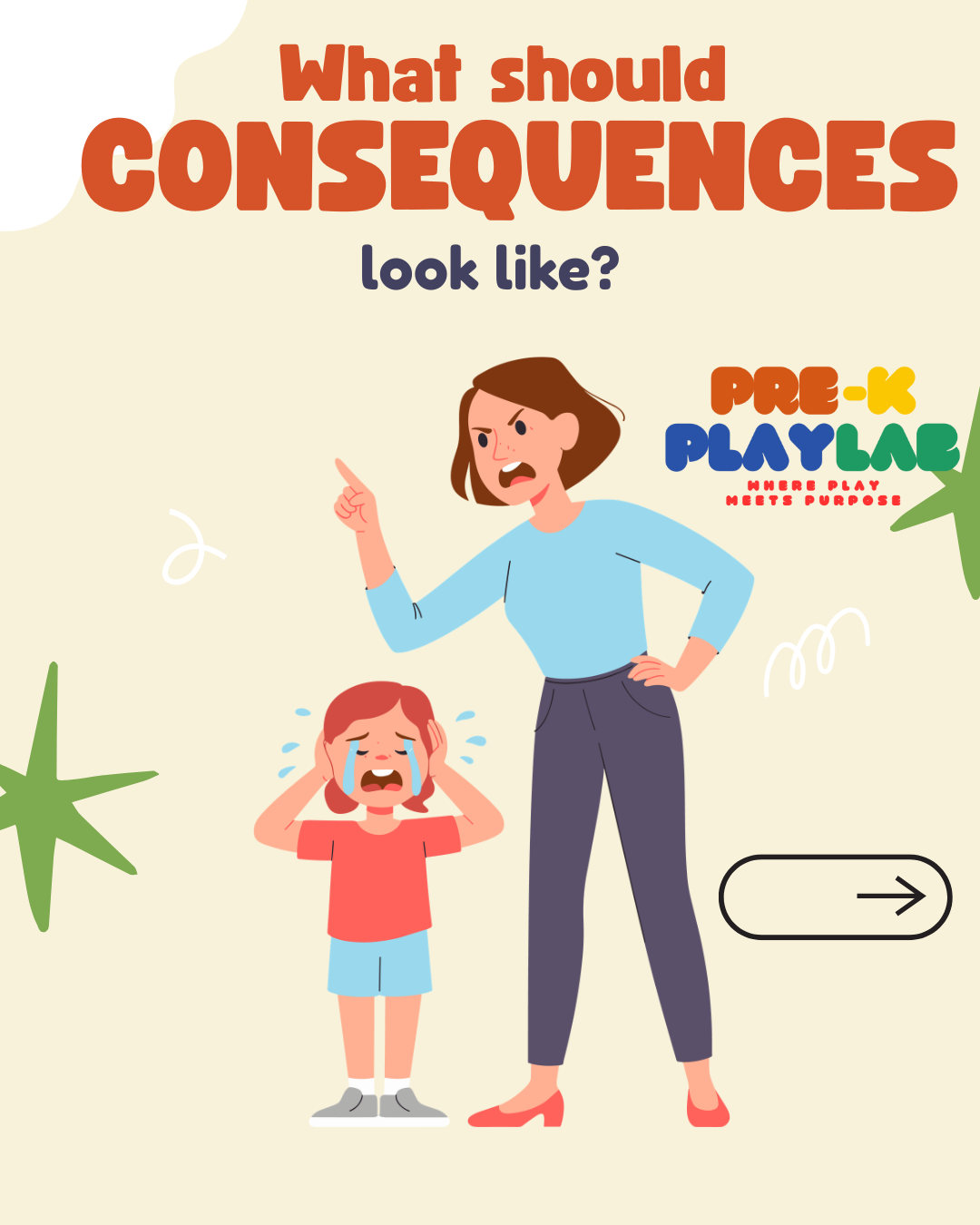
What To Do Before Giving a Consequence?
When a child does something they shouldn't, our first instinct is often to ask:
“What should the consequence be?”
But what if that's not the first question we should be asking?
Consequences can have a place in teaching children appropriate behavior, but a consequence by itself doesn't necessarily teach a child what they should do differently next time.
Before giving a consequence, there are four things I want you to consider.
1. Does the child understand the expectation?
Before holding a child accountable for an expectation, ask yourself:
Have I actually taught this skill?
Young children are still learning how to wait, transition, share, manage frustration, follow multi-step directions, communicate their needs, control impulses, and handle disappointment.
Sometimes what looks like “not listening” is actually not knowing how to meet the expectation yet.
If the skill hasn't been explicitly taught, modeled, practiced, and reinforced, start there. We can't expect children to consistently demonstrate a skill they haven't learned yet. English Learning Tips Carousel …
2. Look beneath the behavior
Behavior gives us information.
Instead of only asking, “How do I make this behavior stop?”, try asking:
“What is this behavior communicating?”
A child may be trying to escape something difficult, get connection or attention, meet a sensory need, communicate frustration, or gain access to something they want. Understanding the why behind a behavior helps us choose a response that actually addresses what is happening. English Learning Tips Carousel …
This doesn't mean we ignore unsafe or inappropriate behavior. It means we get curious about it so we can teach the skill the child needs.
3. Check regulation before trying to teach
Ask yourself:
Is this child regulated enough to learn right now?
When a child is overwhelmed or in a fight, flight, or freeze response, that probably isn't the moment for a lengthy conversation about better choices.
Help the child regulate first.
Regulate first. Teach second. English Learning Tips Carousel …
Once the child's body and brain are calmer, you have a much better opportunity to talk about what happened, practice a different response, and teach the missing skill.
4. Ask whether the consequence actually teaches something
Before giving a consequence, run it through four questions:
Is it related? Is it reasonable? Is it respectful? Does it help the child learn what to do next time?
If the answer is no, reconsider it. English Learning Tips Carousel …
For example, imagine a child throws blocks.
Taking away recess may be a consequence, but it doesn't necessarily teach the child how to safely use blocks.
Instead, once the child is regulated, we can clearly state the expectation — “Blocks are not for throwing. Throwing blocks isn't safe.” — and create an opportunity to practice using the blocks safely. That's a response connected to the behavior and the skill we're trying to build. English Learning Tips Carousel …
The Goal Isn't Just to Stop the Behavior
It's easy to focus on getting an unwanted behavior to stop.
But sometimes the behavior we're trying to stop is showing us the skill we need to teach. English Learning Tips Carousel …
That's the shift I want parents and educators to make.
Instead of only asking:
“What consequence should I give?”
Try asking:
“What does this child need to learn from this?”
Because ultimately, consequences aren't the goal. Learning is. English Learning Tips Carousel …
Need Help With Challenging Behaviors?
If you're a parent, teacher, childcare provider, or early childhood program struggling with challenging behaviors, PreK PlayLab can help you move beyond simply reacting to behavior and begin identifying the skills children need.
PreK PlayLab offers support and training around early childhood behavior, routines, regulation, developmentally appropriate discipline, and practical strategies adults can actually use.
Interested in parent support, staff training, or consulting for your program?
Work With PreK PlayLab →